






How Razorbacks fit SEC trend of betting on 2026 SCNext risers

In the SEC, recruiting rankings are treated the same way folks treat weather apps.

They’re useful, sure. But nobody builds their day around them.

That’s why ESPN lists like the SCNext 100 never land quite the same in SEC country. The league has made a living off players who weren’t supposed to be that good yet. Or ever. Until they were.

ESPN’s look at the 2026 prospects most likely to outperform their rankings feels tailor-made for that mindset.

It’s a reminder that development still matters, strength still matters, and figuring things out a little later doesn’t disqualify anyone from being a problem.

Especially not in Fayetteville.

The SEC has turned into a league where upside gets tested fast. Freshmen don’t get eased in gently. They get tossed into league play and told to swim.

That’s why the prospects on this list feel familiar to anyone who’s watched Arkansas or its conference neighbors lately.

These aren’t mystery players. They’re just early in the process.

Abdou Toure fits the Arkansas blueprint

Arkansas commit Abdou Toure, ranked No. 34 nationally, already looks like a Razorbacks-type bet. He’s long. He’s explosive. And he’s learned how to turn athleticism into production.

At the City of Palms Classic, Toure didn’t blend in. He won the dunk contest and poured in 78 points across the tournament, knocking down five 3-pointers along the way.

That part is important. SEC athletes are common. SEC athletes who can shoot change lineups.

ESPN noted that Toure’s growth mirrors Baylor’s Tounde Yessoufou, a player who turned improved shooting into rapid ascension.

That’s a comparison Arkansas fans should recognize. The Hogs have leaned into wings who can guard, run, and grow offensively once they arrive.

The Razorbacks don’t need Toure to be perfect on day one. They need him to compete, defend, and stretch the floor just enough to stay playable.

His trajectory suggests he can do that — and then some.

In this league, that’s often enough to earn minutes before expectations catch up.

SEC guards always have second act

Another name that fits the SEC mold is Quincy Wadley, ranked No. 55.

His ranking dipped after injuries slowed his momentum, which happens more often than rankings like to admit.

What matters is what came next.

At Hoophall West, Wadley looked healthy again.

He pushed the pace, made plays for teammates, and showed scoring pop that reminded evaluators why his name was there to begin with.

SPN highlighted his growing list of high-major interest, which includes several programs accustomed to guard-driven success.

The SEC never stops needing guards who can defend, distribute, and keep their heads when games tighten.

Wadley checks those boxes.

Players like him tend to climb once conference play exposes who can actually handle it.

By the time league schedules roll around, nobody’s checking old rankings anyway.

Not every SEC contributor looks flashy

Then there’s Felipe Quinones, ranked No. 74, who feels like the type of guard SEC coaches quietly appreciate.

Quinones brings feel. He understands spacing. He makes ball-screen reads that don’t derail possessions.

ESPN described him as a guard with mature decision-making, which usually translates into trust.

Trust leads to minutes. Minutes lead to production. And production tends to rewrite narratives.

The SEC has plenty of room for guards who don’t dominate headlines but keep offenses functioning. Quinones fits that description.

Players like him often end seasons playing bigger roles than anyone predicted back in July.

Ponder is throwback the SEC still needs

Finally, there’s Marcis Ponder, ranked No. 62, and built like a reminder that not every problem can be solved with shooting.

At 6-10 and nearly 300 pounds, Ponder brings size that still matters in this league.

ESPN pointed to his rebounding, physicality, and rim protection — traits that never go out of style in the SEC, no matter how many big men start drifting beyond the arc.

Yes, there’s development ahead. Conditioning. Offensive polish. That’s expected.

But SEC coaches know how to use size, especially when it changes how opponents play around the basket.

Ponder’s presence alone has the potential to tilt matchups.

Every season, someone like that ends up being more important than expected.

Why SEC rarely panics about lists

The common thread with these prospects isn’t hype. It’s growth.

The SEC has become a league where development curves matter more than initial placement.

Arkansas has leaned into that philosophy. The Razorbacks have consistently trusted tools, competitiveness, and progression over static rankings.

Toure landing on this list fits that pattern perfectly.

By the time these 2026 prospects reach campus, some will already be ahead of schedule. Others will catch up quickly.

And when that happens, nobody in the SEC will act surprised.

Razorbacks need steadiness from Brazile as SEC pressure grows in Norman

Arkansas has enjoyed flashes of brilliance this season, but some nights feel like a hurricane with no warning.

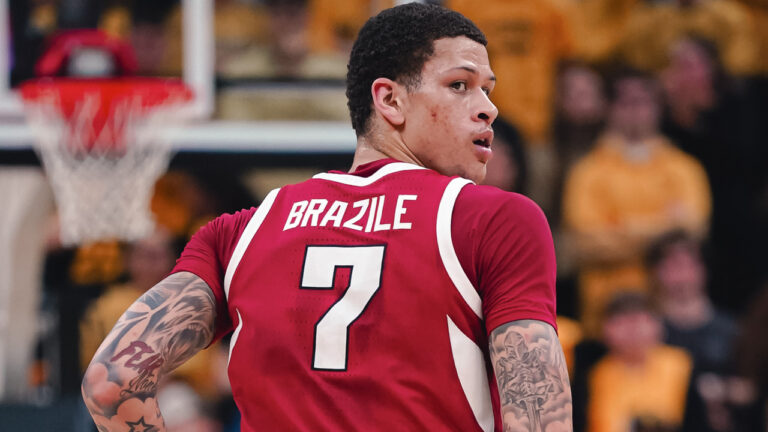
Trevor Brazile has the talent to shift games. On Tuesday night in Norman, Arkansas could use him to find some consistency.

The No. 15 Razorbacks are headed to Oklahoma fresh off back-to-back wins. Tip-off is set for 6 p.m. Tuesday from the Lloyd-Noble Center, televised on ESPN, and Arkansas is favored by 2.5 points in BetSaracen odds.

That line matters, but what matters more is context.

With a red-hot Kentucky team coming to Bud Walton Arena on Saturday, the Hogs don’t need a two-loss week as SEC Tournament positioning begins to take shape.

Arkansas sits at 15-5 overall and 5-2 in league play, coming off strong showings against Vanderbilt and LSU.

Even with that success, consistency becomes currency this time of year.

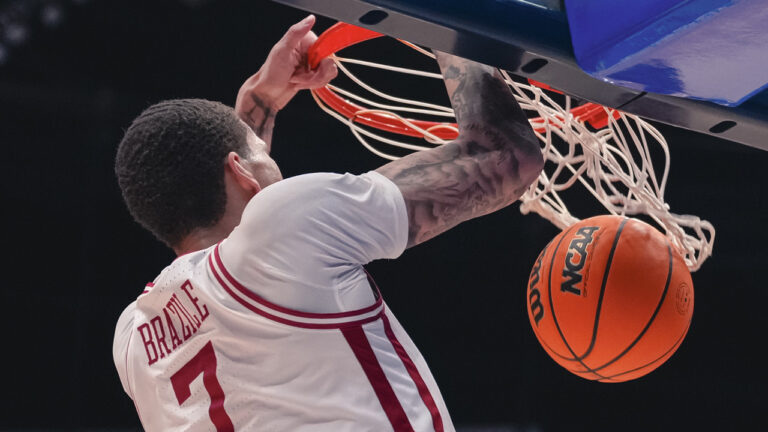
Brazile has flashed scoring, rebounding, and the kind of physical presence that can alter a game. Yet some nights feel like previews instead of polished performances.

Arkansas could use his steady hand on Tuesday more than it might admit.

On the other side, the Oklahoma Sooners are struggling through a six-game skid.

They’ve dropped games narrowly to Alabama and Missouri — the latter in overtime where the Tigers hit two buzzer-beaters — but they still bring enough scoring punch to make Arkansas stay sharp.

That’s the danger in a game that might look ahead to Kentucky on paper. You don’t guard a scoreboard. You guard the ball, shots, and body language.

Oklahoma’s offense can hang around, and Arkansas must respond

Oklahoma is under fifth-year head coach Porter Moser, a familiar name in these parts from his time at Arkansas-Little Rock and his memorable Final Four run with Loyola-Chicago.

The Sooners are 11-9 and 1-6 in SEC play, but their offensive profile is deceptive.

According to KenPom, their offense ranks 47th in the nation, while the defense sits at 121st. That means they can score, but they also give up plenty of points.

Oklahoma averages 83.7 points per game — ninth in the SEC — and allows 75.9.

Their offense slips slightly in league play, and their pace is slow, but they’re tough to shake if Ark naps for a stretch.

The Sooners rely on a few key guys to stay competitive.

Nijel Pack — whom Arkansas has seen in three different venues — leads the Sooners with 15.7 points per game and shoots 42.2% from deep.

He’s not shy about letting it fly, and his 7.4 three-point attempts per game are nearly three more than any other Oklahoma player.

Xzayvier Brown is another scoring threat. The St. Joe’s transfer averages 16.5 points while leading the SEC in free-throw percentage and attempts.

Inside, Mohamed Wague and Tae Davis handle boards and physical play, combining for nearly half of Oklahoma’s offensive rebounds.

Against a team that can score from all levels, consistency and chemistry matter. Arkansas has those in bursts. What it needs from Brazile is steadiness.

Razorbacks can’t afford two-loss week with Kentucky looming

Since Arkansas’ conference opening win over Tennessee, every SEC opponent the Hogs have faced came off a loss, and the pattern continues with Oklahoma.

Two of Arkansas’ SEC games have come on the road — Auburn and Georgia — with the lone true road win at Ole Miss.

That sequence speaks to resilience but also suggests a fragile rhythm.

Arkansas’ shooters remain among the best in the league, leading the SEC at 38.8% from three.

Oklahoma takes plenty of threes too, and converts at 34.8%. But the Sooners rank 12th in defending the perimeter, allowing 34.2% from deep.

That’s Arkansas’ strength. But strengths don’t matter if they’re streaky.

The Razorbacks clearly have firepower — like freshman Darius Acuff Jr. leading the team in scoring and assists.

What they haven’t had as consistently is a night where every piece clicks.

That’s where Brazile becomes a storyline. He can dominate the boards, defend multiple positions, and give Arkansas a physical edge that matters late in games.

But for that to happen, steadiness needs to show up in the stat line.

In this game, Arkansas isn’t trying to make a splash. It’s trying not to fall.

Tuesday is less about spotlight. It’s about avoiding a loss that haunts.

Arkansas shouldn’t need it. But knowing how deep this conference plays, the Hogs can’t afford to assume anything.

Darius Acuff Jr. keeps rolling with another SEC freshman honor

There are weeks in college basketball where players have big nights and make fans talk.

Then there are weeks when something bigger feels like it’s settling into place.

For Arkansas freshman guard Darius Acuff Jr., this season’s SEC Freshman of the Week honors are starting to feel like part of a rhythm.

Now he gets to try it on the road against Oklahoma in a game that will start on ESPN at 6 p.m. Fans will also be able to listen online here at HitThatLine.com and on the radio at ESPN Arkansas 99.5 in Fayetteville, 95.3 in the River Valley, 96.3 in Hot Springs and 104.3 in Harrison-Mountain Home.

On Monday, Acuff was named SEC Freshman of the Week again — his record-tying sixth award in the last seven weeks.

That’s not just good. That’s a sign of something steady and electric in a Razorbacks lineup that’s still finding its groove.

“I’m just trying to help the team win,” Acuff said after another big week. “Whatever it takes, that’s how I try to play.”

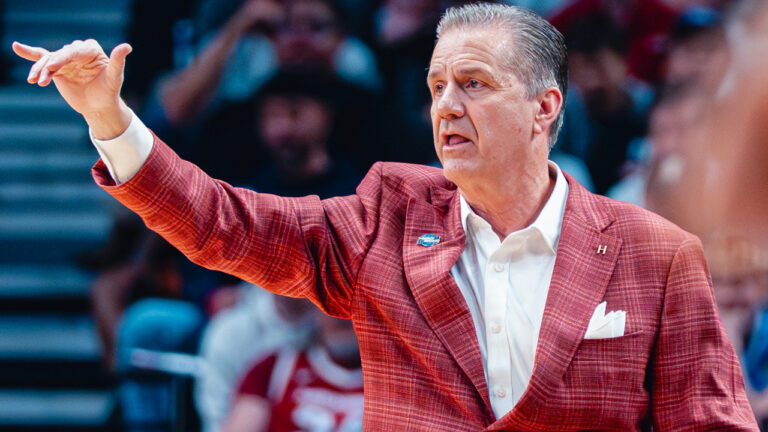
Arkansas head coach John Calipari has said more than once that he wants a consistent mindset from his team.

When your freshman guard keeps winning weekly awards from the SEC, that consistency starts on the court.

The week that was

This latest honor came after a pair of strong outings. Acuff averaged 24 points and 5.5 assists in wins over No. 15 Vanderbilt and LSU.

Those numbers jump off the page, but the moments inside those games tell the real story.

Against Vanderbilt, Acuff finished with 17 points. He was patient early and relentless late, scoring with poise as Arkansas pulled away.

Then came LSU in front of the Bud Walton Arena crowd.

Down 59-56 with under 10 minutes left, Acuff didn’t panic. Instead, he took over.

He hit a clutch three to tie the game. Then he threaded a pass for a Karter Knox triple that put the Razorbacks in front. He even made plays on defense, swatting away two shots on one LSU possession before racing coast to coast for a layup.

By night’s end, Acuff had a career-high 31 points and six assists to go with his two blocked shots. He shot 10-of-11 from the floor in the second half, including 3-of-3 from deep, to lift the Hogs to the win.

“I just kept playing hard,” Acuff said of that stretch. “We needed baskets, we needed stops, and everybody just kept moving.”

Making history

It’s not just that Acuff keeps winning Freshman of the Week honors. It’s that he’s now tied with some big names in conference history.

Only five other players have earned six Freshman of the Week honors in an SEC season: James Robinson, Brandin Knight, Bradley Beal, Jabari Smith and Brandon Miller.

Acuff’s name now sits with theirs in that list.

Those aren’t small names. They’re guys who made an impact beyond their first year. And Acuff, just getting started, is already in that conversation.

Through it all, his approach has stayed the same: help the team, make winning plays, and let performances speak for themselves.

“I focus on being me — looking for my shot, finding open teammates, and doing what helps us stay ahead,” he said.

What it means for the Hogs

The Razorbacks aren’t just riding one freshman. But Acuff’s emergence gives this Arkansas team something steady when games start to feel chaotic.

Still, coach Calipari wants more than flashes. He’s talked about consistency. And when your freshman keeps earning weekly honors, that’s one way to build consistency across a season.

Fans can feel it in Fayetteville. There’s a confidence that comes from watching a young leader deliver in big moments.

And as the calendar turns deeper into conference play, that confidence might matter even more.

For now, Acuff’s making history. And he’s doing it with a calm that seems bigger than his years.


Razorbacks’ radio analyst Matt Zimmerman on getting on road to Oklahoma

After getting stopped in Oklahoma, previewing game Tuesday night against the Sooners and importance of Trevon Brazile’s experience.

Acuff Jr. heats up snowy Fayetteville in big Arkansas win at home

FAYETTEVILLE, Ark. — It was one of those Arkansas winter days where the snow doesn’t ask permission and the cold settles in early.

Temperatures stayed below freezing all day. Snow fell from morning through night. Fayetteville looked more like a snow globe than a basketball town.

Inside Bud Walton Arena, though, Darius Acuff Jr. decided it was shorts weather.

The freshman guard poured in 31 points, including 24 in the second half, as Arkansas basketball beat LSU 85-81 on a frozen Saturday that needed something warm to believe in. Acuff provided it. Over and over again.

This wasn’t a smooth win. It wasn’t a pretty win. But it was a win that felt bigger than four points, especially given the weather, the slow start, and the pressure late.

Outside, snow piled up. Inside, Acuff caught fire.

LSU came in ready to grind. The Tigers controlled the paint early, grabbed second-chance points, and made Arkansas work for every look. The Razorbacks looked tight in the first half, missing shots and struggling to string together stops.

At halftime, LSU led 37-33, and it felt colder than the temperature reading.

Arkansas needed heat. It got it from the freshman.

Cold start, then a spark

Acuff didn’t dominate early. No one did.

The first half felt like a snow-day pickup game where everyone needed a few minutes to loosen up. Shots were rushed. Possessions felt heavy.

LSU used that to its advantage. The Tigers attacked the rim and worked the glass. Arkansas stayed close but couldn’t flip momentum before the break.

Then the second half started, and Acuff looked like he’d found a heater somewhere under the bench.

He scored from everywhere. Pull-up jumpers. Threes in rhythm. Tough shots late in the clock. At one point, it felt like every Arkansas possession ended the same way — Acuff rising, releasing, and jogging back on defense.

The Razorbacks went on a run midway through the half, making nine straight field goals. Acuff either scored or assisted on every one of them. That stretch turned a tight game into Arkansas’ game to lose.

It was the kind of run that makes an arena forget about snow, roads, and frozen windshields.

By the time the final buzzer sounded, Acuff had 31 points, the best scoring night of his young career. He shot 10-of-11 in the second half, including three made threes, and played with the calm of someone who didn’t care how cold it was outside.

He wasn’t forcing shots. He wasn’t rushing. He just kept taking what LSU gave him and turning it into points.

Acuff takes over the night

Freshman Meleek Thomas added 13 points, and Billy Richmond III chipped in 11, but this night belonged to Acuff. When Arkansas needed a bucket, he delivered. When LSU cut the lead, he answered.

It didn’t matter that the Razorbacks struggled at the free-throw line. They made just 7 of 18, which normally spells trouble in a close SEC game. But Acuff’s shooting from the field covered for it.

Sometimes, one hot hand can cancel out a lot of mistakes.

LSU didn’t play poorly. That’s what will makes this loss sting for awhile. Getting close to a road win in the SEC tends to linger

The Tigers outscored Arkansas in the paint and finished with 19 second-chance points. All five starters scored in double figures. Dedan Thomas Jr. led the way with 18 points, while Pablo Tamba added 12 points and 10 rebounds.

LSU did almost everything right except finish.

Late in the game, with Arkansas clinging to a three-point lead, Acuff missed two free throws. LSU had a chance. One good shot could’ve changed the night.

It didn’t fall. That miss will hang around for the Tigers. Long after the snow melts.

What cold night meant for Arkansas

For Arkansas, this win meant more than just another SEC notch.

It showed the Razorbacks could survive an ugly start, handle pressure, and close a game when things weren’t perfect. That matters in February. It matters in March.

The Hogs improved to 15-5 overall and 5-2 in SEC play, staying near the top of the conference. More importantly, they showed they have a freshman who isn’t afraid of the moment.

On a day when Fayetteville never got above freezing, Acuff stayed hot for 20 straight minutes. That’s not something you teach.

Fans left walking into the snow with something to talk about. Roads were slick. Windshields were iced over. But Arkansas fans left warmed by what they’d just seen.

A freshman guard carrying the load. A team finding its edge. A winter night that turned into something memorable.

Cold outside. Fire inside.

Dudley Dawson on weather forcing changes, Razorbacks’ portal hauls

Where Hogs added key pieces to fill holes and what he’s looking to see from basketball and a lot more areas covered.

Arkansas Weighs Jersey Patches as NCAA Eyes Rule Change

If you ever wondered how long college sports could hold the line on jersey advertising, Arkansas athletic director Hunter Yurachek made it clear the line has already moved.

Jersey patches, once treated like forbidden territory, are now a real thing after the NCAA approved up to two logos on uniforms and a third in conference championship events. They can be up to four square inches in size.

“We’re all sharing revenue now with our football, men’s basketball players,” Yurachek told Sports Business Journal, “so we’re being a little hypocritical if we’re going to say we’re not going to put a commercial patch on their uniform because they’re still collegiate athletes.”

Yurachek’s point is simple: if schools are sharing revenue with players, resisting jersey patches doesn’t quite add up. Not that he wants uniforms plastered with ads — far from it.

Current NCAA discussions point toward size limits and placement rules that keep patches controlled and tasteful.

In a business landscape where athletic departments are pressed for new revenue, that’s saying something.

Why Arkansas Sits in a Unique Spot

The Razorbacks don’t just compete on the field. They operate in a business ecosystem anchored by major Northwest Arkansas companies like Walmart, Tyson Foods, and J.B. Hunt.

Those aren’t names from an economics textbook. They’re neighbors, sponsors, and natural partners in any future jersey patch program.

Those local ties matter because they shape how a program sells itself. A corporate patch isn’t just a logo. It’s a relationship.

For Yurachek and the Hogs’ leadership, potential patch partners aren’t faceless advertisers buying their way onto jerseys.

They are well-known established supporters whose involvement feels familiar — brand extensions of a community already deeply tied to Arkansas athletics.

That makes the idea less jarring than selling space to some unrelated out-of-state corporation.

Instead, it’s aligning with the market realities in Fayetteville and beyond.

The Financial Pressures Driving the Shift

The Razorbacks aren’t alone in this. Schools nationwide are searching for ways to cover rising costs — including those associated with NIL revenue sharing, expanded travel, coaching pay, and facility upgrades.

Under current NCAA settlement rules, schools are sharing more with athletes than ever before, while traditional revenue streams have stagnated.

That puts pressure on programs to monetize assets that used to be off-limits.

Industry research suggests jersey patches could be worth $500,000 to $12 million annually for top football and men’s basketball programs, depending on brand strength and market size.

Those aren’t trivial numbers. That’s competitive-budget territory.

Admitting that to a regional newspaper columnist won’t earn you a Pulitzer, but it does help explain why athletic directors are leaning into the concept.

Tradition Versus Reality

Some fans bristle at the idea of patch sponsorships on college uniforms — especially purists who grew up with plain jerseys and big numbers.

But consider this: bowl game patches, field logos, and television sponsorships are all part of the modern college sports experience.

Jersey patches might just be the next step in a progression that’s been happening for decades.

Yurachek summed up the tension between tradition and necessity when he said the value of exposure “with SEC football on Saturdays, and when we get into February and March and March Madness for men’s basketball, there is a significant, seven-plus-figure value for having logos on jerseys.”

That’s not a sales pitch. It’s reality.

How This Could Unfold

Don’t expect Arkansas to slap every available patch on its uniforms. Yurachek’s emphasis has been on balance — finding strategic partners, preserving brand identity, and making sure placements feel like additions, not distractions.

Football and men’s basketball jerseys are the obvious starting points. Other sports could follow once guidelines are clear and partners are locked in.

In nearby Baton Rouge, LSU has already created sample jerseys and even finalized a multimillion-dollar patch deal with Woodside Energy — all in anticipation of NCAA approval.

That kind of proactive thinking sets the tone. Arkansas isn’t scrambling. It’s listening, learning, and preparing.

The Bigger Picture for College Sports

Once one major program normalizes jersey patches, others will follow. It’s how change happens in college athletics — methodically, then suddenly everywhere.

For Arkansas, patches represent more than revenue. They reflect a larger shift in how programs balance tradition with financial reality.

Keeping uniforms tasteful, controlled, and respectful of school heritage will be part of the rollout, but the conversation has clearly moved forward.

As Yurachek put it, if schools are sharing revenue with players, they ought to consider all the revenue tools available — including patches on jerseys.

It’s still early. But for the Razorbacks and many of their peers, that future is a conversation worth having.