











61.4 F
Fayetteville

Bud Light Morning Rush Podcast: 6-30-25


Tye made a hole-in-one this past weekend, he shares his thoughts. More from Remy Cofield and on Arkansas Football. 

Guests: Chris Marler 

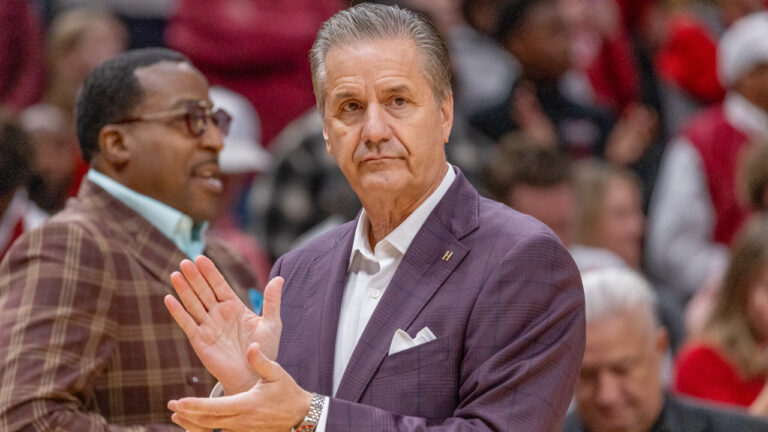
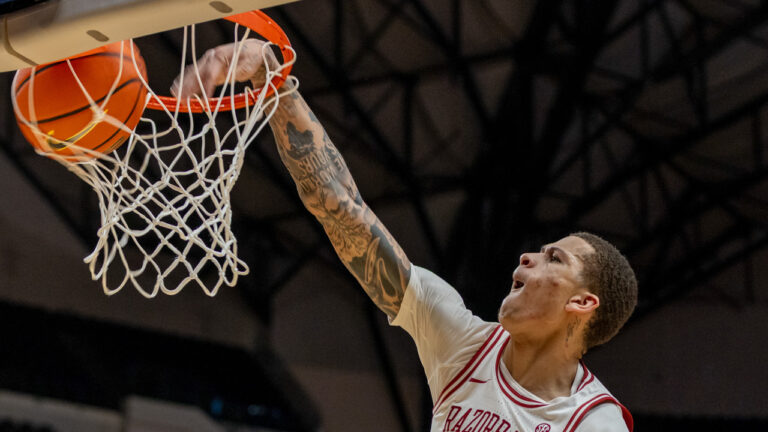
Darius Acuff may be emerging as Razorbacks’ next NBA Lottery hopeful

FAYETTEVILLE, Ark. — The last time Arkansas had this much national buzz about a freshman guard, Moses Moody and Anthony Black were turning college promise into first-round NBA reality.

Now all the talk has shifted to Darius Acuff Jr., a Detroit native whose name is already penciled into NBA lottery projections for 2026.

The anticipation isn’t just about potential; it’s about what Acuff has already shown on some of the biggest stages high school basketball has to offer.

By the time Acuff stepped onto the campus in Fayetteville, he had already built a reputation as the most dominant and dynamic lead guard in his class.

“He burst onto the national scene in the spring of 2023 by putting up huge numbers in the Nike EYBL,” wrote Adam Finkelstein, director of scouting for 247Sports, in his ‘way-too-early’ 2026 NBA Mock Draft for CBS Sports. “Since then, he’s only continued to sculpt his frame and assert his playmaking prowess.

“He was arguably as good as anyone in the country at putting his team on his back and creating offense on demand last year at IMG Academy.”

Such praise isn’t doled out lightly, especially in an era where five-star guards are almost expected to be one-and-done.

Acuff averaged 20.4 points and 5.5 assists per game during his junior year at IMG Academy, guiding the Ascenders to a 20-9 record and a top-six finish in the final MaxPreps poll. His efficiency and leadership stood out.

“He’s a tough shot maker who knows how to create space, with an uncanny feel for shaking defenders off balance,” reads one scouting report.

Reports are that poise and confidence have become signatures of his game.

What separates Acuff from other top recruits isn’t just his scoring but his ability to control the game’s tempo and make reads under pressure.

He’s comfortable driving with either hand, possesses exceptional ball-handling, and is a capable playmaker in transition.

His outside shooting, 35.9% from three in the 2023 Nike EYBL and 36.3% in 2023-24 EYBL Scholastic events, adds another dimension to his offensive game.

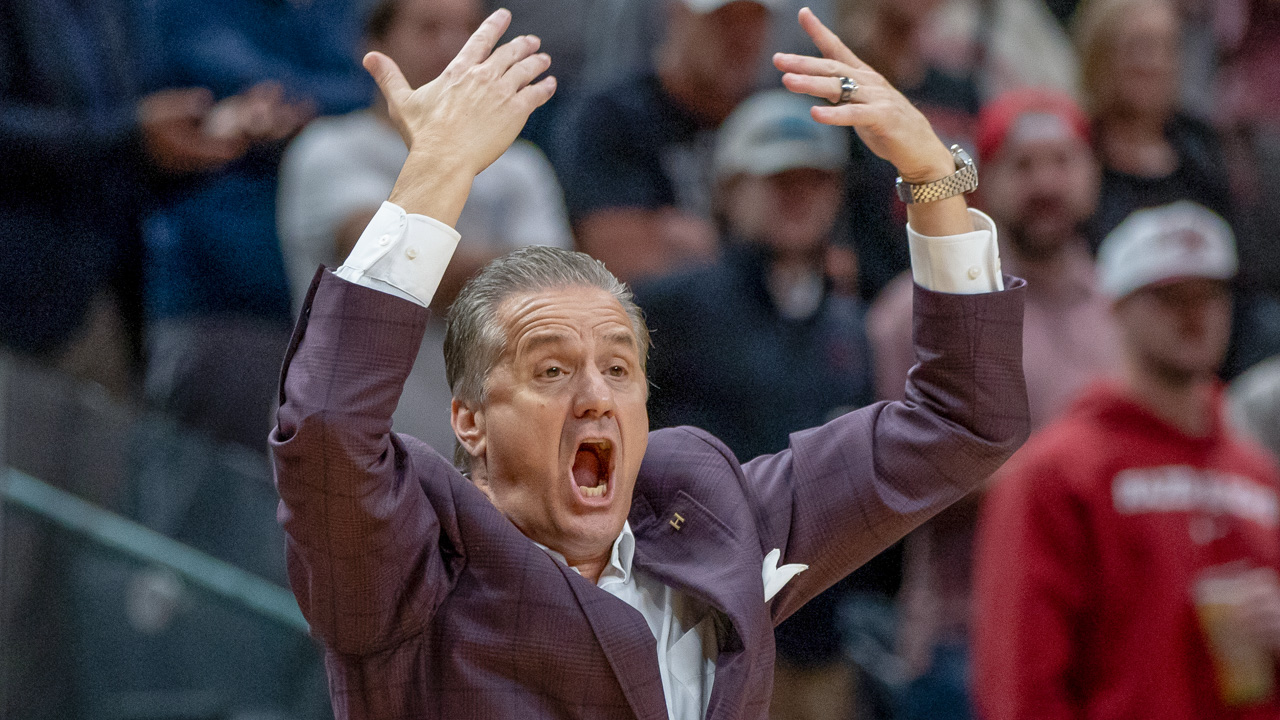
For Razorbacks coach John Calipari, who arrived at Arkansas with a reputation for molding NBA-ready guards, Acuff is the kind of player who could restart a streak.

Calipari’s previous run of 17 straight years producing a first-round NBA Draft pick ended in 2025 when Adou Thiero went 36th overall. That streak, which included 25 lottery selections, helped define Calipari’s tenure at Kentucky and set a new standard for college-to-pro pipelines.

“Acuff is the most dominant and dynamic lead guard in the class, who plays with outward confidence. He controls the offensive end of the floor with the ball in his hands,” one 247Sports scouting report observed.

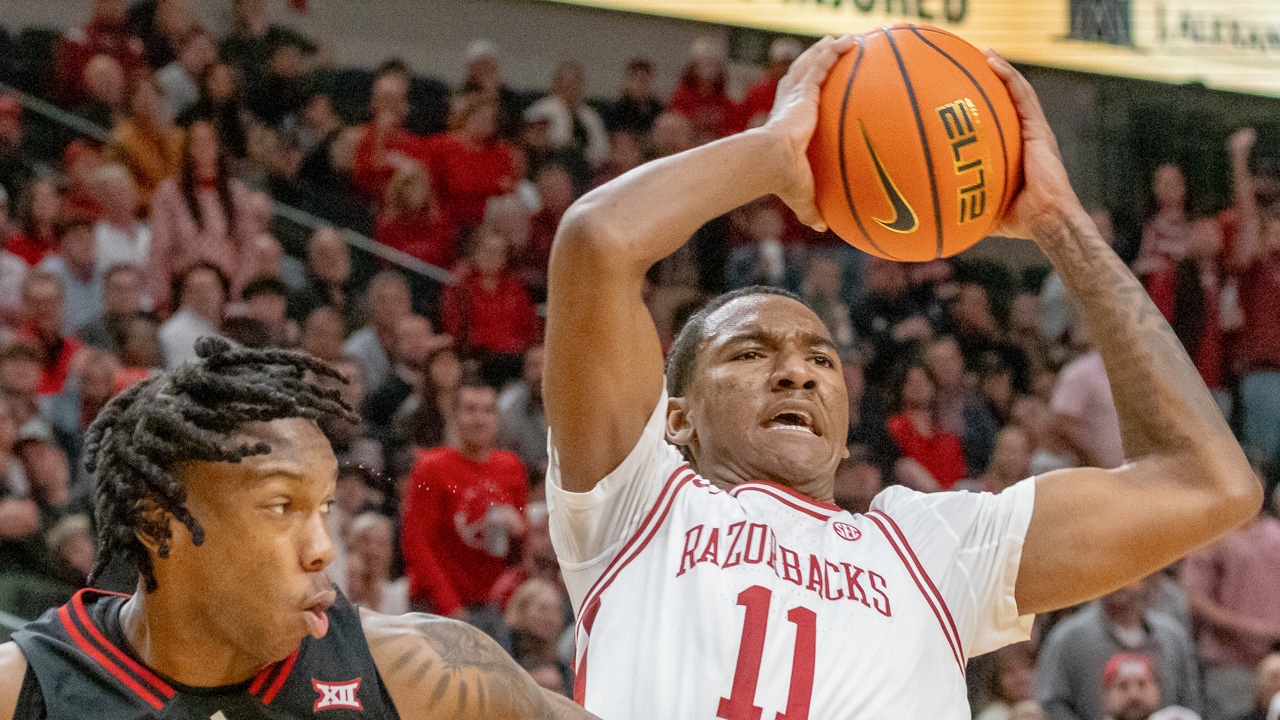
That control is exactly what Calipari’s guard-centric approach demands. Acuff, along with returning standout DJ Wagner and another five-star freshman in Meleek Thomas, will have every opportunity to shine in a backcourt designed for high usage and NBA-style spacing.

The stakes for Acuff’s freshman campaign are high, both for Arkansas and for his own NBA aspirations.

Should he fulfill the projections, Acuff would be just the third Razorback to go in the lottery as a one-and-done player, joining Moody and Black. The significance is not lost on those who follow the program closely.

“At Arkansas, he looks like the next dynamic guard to star for John Calipari,” Finkelstein predicted, “and while they return DJ Wagner and add another five-star freshman guard in Meleek Thomas, the expectation is that Acuff will have every opportunity to stand out.”

Acuff’s journey from Detroit Cass Tech to IMG Academy and now Arkansas has been defined by self-belief and continual adaptation.

As a junior at IMG, he didn’t just pile up stats, he made his teammates better and won MVP honors at the USA Basketball Junior National Team minicamp, where he averaged 17.8 points, 4.7 rebounds, and 4.0 assists, helping the United States win gold.

Versatility is why scouts and analysts are convinced he can translate his success against elite prep competition to the SEC and, eventually, the NBA.

What makes Acuff’s fit so intriguing is the perfect storm of talent and opportunity.

The Hogs have become a magnet for high-level recruits, and with Calipari at the helm, the system is built for high usage guards who can score, distribute, and take over in clutch moments.

“Calipari’s track record with producing star NBA guards is unmatched by any current college coach,” the 247Sports report notes, and that’s not hyperbole.

Guards like John Wall, Devin Booker, Tyler Herro, and De’Aaron Fox all flourished under Calipari’s watch at Kentucky before making the leap to the NBA.

Yet for all the hype, Acuff remains grounded. Interviews with coaches and teammates paint a portrait of a leader who is intense in competition but measured off the court

“He just sees the floor at another level,” said a former IMG teammate. “He can take over with his scoring, but he’s always looking for the right play.”

The 2026 NBA Draft conversation is already swirling, with CBS Sports projecting Acuff as the No. 5 overall pick, potentially to the Phoenix Suns.

That projection comes with the caveat that mock drafts this far in advance are speculative, but the consensus is clear that Acuff has the tools, mindset, and context to make it a reality.

Acuff’s presence signals a new chapter for the program with a chance to reclaim the momentum that began with Moody and Black, fueled by a coach whose NBA pipeline is the envy of college basketball.

If Acuff lives up to the billing, he’ll be remembered not only as a lottery pick but as the player who helped restore the Hogs’ reputation as a launching spot for NBA-bound guards.

Debate intensifies over NCAA Tournament expansion and its impact

FAYETTEVILLE, Ark. — It’s going to be interesting whenever we can hear from Arkansas coach John Calipari about the latest college basketball discussion.

The first Thursday of March Madness is the closest thing college basketball has to a national holiday. Offices empty, productivity drops, and millions of brackets are filled out, often more in hope than in knowledge.

Despite all that, behind the scenes of this American tradition, a debate is raging. Should the NCAA expand its men’s and women’s basketball tournaments beyond the current 68 teams?

The latest round of controversy was sparked by news that NCAA officials are actively considering adding up to eight more squads to the tournament field, possibly as soon as 2026.

NCAA president Charlie Baker confirmed ongoing talks with media partners CBS and Warner Bros. Discovery, suggesting that “expansion could come in 2026, if a deal is struck between now and early summer.”

It’s almost like somebody’s flat trying to get a little too greedy here. Apparently I’m not the only one on that island.

For many fans and analysts, the argument against expansion is straightforward.

“Almost no one is asking for it,” wrote ESPN’s Dan Wetzel, capturing the mood of a large segment of the basketball faithful.

There is no groundswell of public demand. The First Four play-in games, introduced when the field was expanded to 68 teams in 2011, do not generate massive ratings or excitement.

The First Four may be overkill and I’m not the only one saying it, either.

The pressure to expand is real and, in many ways not too surprising, inevitable. College sports are big business.

The men’s tournament alone generated over $900 million for the NCAA in fiscal year 2024, accounting for more than half of the organization’s total revenue. Adding more games means more television inventory, more ticket sales, and, crucially, more “units” or the shares of broadcast revenue that conferences distribute to their members.

“Expanding the NCAA Tournament is going to be expensive,” USA TODAY wrote. “Unless you can guarantee that schools and conferences won’t lose money by expanding, it’s a risky bet.”

Coaches and athletic directors, who often receive performance bonuses for tournament appearances, have mixed feelings. An anonymous poll of over 100 head coaches in 2024 found that about 65% favored some form of expansion, with the majority split between adding four or eight teams.

“As a mid-major coach, I think the more access we have the better. I know the high-major teams will take most of the additions, but I’d rather have the shot,” one coach told CBS Sports.

That’s not the majority opinion, though. There are exceptions that attempt to prove the validity of every argument.

The numbers behind the tournament’s composition are revealing. In 2025, the so-called Power 5 leagues (ACC, Big East, Big Ten, Big 12, and SEC) secured 33 of the 37 at-large selections, with only four going to teams outside those conferences.

Critics argue that expanding the field would simply allow more middle-of-the-pack teams from dominant conferences to sneak in, rather than opening doors for true underdogs from smaller leagues.

Another point of contention is if the tournament really needs more “access”?

Every Division I team already has a path to the Big Dance through its conference tournament, where a Cinderella run can still punch a ticket.

“If you consider the conference tournaments a play-in round of its own, which it is, the NCAA tournament is already over 300 teams strong. Almost everyone already has a second chance,” Wetzel said.

To critics, offering eight more spots is granting a third chance, diluting the stakes and the drama that make March Madness unique.

Proponents of expansion, however, see a different picture.

“We need to expand the NCAA Tournament,” Missouri coach Dennis Gates said. “It needs to expand. Put me on the record; it has to expand. The opportunity has to be there for more kids, more teams, and more fans.”

For coaches at mid-majors and schools outside the Power 5, even a slim chance at an at-large bid can transform a program’s recruiting, finances, and morale.

The television landscape complicates matters. While marquee games in the Round of 64 and beyond routinely draw audiences of 9-18 million, First Four contests have traditionally lagged.

In 2025, the First Four set a record with 7.4 million gross viewers, a 20% increase from the prior year, but these numbers still pale compared to the main event.

Most First Four games average 2-3 million viewers, often relegated to cable’s TruTV. Critics argue the lack of buzz is a sign that the current field is already stretched.

Still, the NCAA’s financial incentives are real. Each tournament “unit” is worth about $2 million, paid out over six years, and shared by the conferences.

Even a handful of new spots could mean millions in additional revenue, not just for the NCAA but for each school that makes the cut.

For smaller athletic departments, this money can fund scholarships, facilities, and coaching salaries; for the biggest programs, it’s a matter of prestige and power.

Tradition might be the strongest argument against change.

The two-day wall-to-wall basketball binge at the start of March Madness is more than a sporting event. It’s a cultural ritual.

“These are pseudo national holidays, complete with people skipping work and school while tuning in at the office or during well-timed lunches,” Wetzel said.

For now, that magic endures, just barely. Each tweak to the format risks breaking a spell that has survived even as general interest in college basketball has waned.

As the debate rages on, the NCAA is left with a delicate calculus of chase short-term gains and risk long-term alienation, or protect the status quo and leave millions on the table.

The decision could come within weeks, but the ramifications will echo for years.

“Pigs get fat, hogs get slaughtered,” Wetzel warns, capturing a sense of foreboding shared by many who love the tournament as it is.

In the end, what’s at stake is something more than dollars and brackets.

It’s the balance between access and excellence, tradition and progress, that has made March Madness a fixture on the American calendar.

Whether the field stays at 68 or grows to 76, the real test will be whether the tournament can remain what it has always been, a celebration of the improbable, the unforgettable, and the uniquely American thrill of the upset.

NIL Collectives persist after NCAA ruling, but who sets ‘market value?’

FAYETTEVILLE, Ark. — Despite new NCAA regulations, Name, Image, and Likeness (NIL) collectives will remain a fixture in college sports, fueling debate over who truly defines market value for student-athletes.

WNSR’s Bill King pointed his out on Halftime with Phil Elson and Matt Jones on ESPN Arkansas.

On June 26, the NCAA adopted new guidelines clarifying booster involvement with NIL collectives, but stopped short of banning them. Instead, the organization emphasized more transparency and compliance measures.

“The NCAA is not prohibiting NIL collectives,” NCAA president Charlie Baker said in a statement, “but we expect institutions to ensure these arrangements stay within our rules.”

Read the full NCAA guidelines.

NIL collectives, third-party groups of donors and businesses pooling resources to pay athletes, have exploded since the NCAA lifted restrictions in 2021. Critics argue that collectives risk turning college sports into a bidding war, while athletes and universities defend them as vital opportunities.

According to Michael Caspino, a leading NIL attorney, “Market value is whatever someone is willing to pay. That’s how free markets work, and the NCAA is catching up to that reality.”

Still, others warn of blurred lines.

“If a collective is overpaying for a backup offensive lineman, is that really market value or just pay-for-play?” said Mit Winter, a sports law expert.

The question of who defines “market value” remains open.

Some point to platforms like Opendorse and On3 that use athlete performance, social influence, and engagement data to set benchmarks. But with deals ranging from $500 social posts to multimillion-dollar contracts, the spectrum is vast.

Universities are now tasked with increased oversight, but as Ross Dellenger writes, “The market is chaotic, and the NCAA’s new guidelines are unlikely to tame it.”

For now, collectives aren’t going anywhere, and the definition of market value, much like college athletics itself, remains in flux.

Phil Steele’s 2025 SEC predictions put Razorbacks in tough position

FAYETTEVILLE, Ark. — As July approaches, Arkansas fans are facing a sobering reality.

Phil Steele, whose annual predictions shape college football conversations across the country, has placed Arkansas near the bottom of his 2025 SEC rankings. With the Razorbacks projected to finish 11th out of 16 teams, the sense of urgency in Fayetteville is unmistakable.

Steele’s latest forecast, published this week, doesn’t sugarcoat things for Sam Pittman’s squad.

Entering his sixth season as Arkansas’ coach, Pittman finds himself at a crossroads. “2025 could be a make-or-break season for the Arkansas head coach,” Steele wrote, highlighting the consequences of hovering around .500 over his tenure.

Pittman’s 30-31 record, including a brief rebound to 7-6 last year after a disappointing four-win campaign, has left the program and its supporters hungry for more.

The pressure is mounting, not just from preseason publications, but internally as well.

Athlon Sports, echoing the mood in Fayetteville, recently included Pittman on its list of SEC coaches whose jobs may hinge on this fall’s results.

“Sam Pittman will return for his sixth season in Fayetteville, but the hot seat is real,” said an anonymous coach.

With bowl eligibility now an expectation, anything less could spell change at the top, multiple media predictions are writing.

Arkansas’ journey over the past five years has been turbulent. The Razorbacks captured national attention with a nine-win season in 2021, only to regress in subsequent years.

Last fall’s 7-6 record, salvaged by late-season wins and a bowl appearance, offered a glimmer of hope, but the 2025 schedule is unforgiving. Early games against Notre Dame and Arkansas State leave little room for error.

In response, Pittman has made calculated moves.

The addition of Taylen Green at quarterback, a senior transfer with a strong arm and leadership qualities, aims to stabilize the offense.

On defense, key returnees like Xavian Sorey Jr., fresh off a 99-tackle season, and Stephen Dix Jr. will anchor a unit that’s still trying to find its identity. Yet, compared to SEC heavyweights, Arkansas’s depth remains a concern.

National analysts remain skeptical. ESPN’s Adam Rittenberg pointed out that Pittman escaped the “hot seat” label with last year’s moderate success, but the clock is ticking.

“If Arkansas doesn’t go bowling, it’s going to be tough for Pittman to stay,” an SEC coach told On3. In a conference where patience is thin, 2025 may be Pittman’s last chance to prove his approach works.

The SEC itself is evolving.

With Texas and Oklahoma joining the fold, competition is stiffer than ever. Steele predicts Georgia, Alabama, and LSU will control the conference’s upper tier, while Arkansas must battle for respect and relevance.

National bowl projections from CBS Sports don’t favor the Razorbacks, and sportsbooks have set a modest win total over/under at 5.5, underscoring the skepticism from outside observers.

The internal pressure is just as fierce. Pittman remains optimistic, recently telling reporters, “We know what’s at stake. Our guys are bought in, and we’re ready for the challenge.”

et, the roster still has holes, particularly on the offensive line and in the secondary. The running back room is short on experience, putting extra weight on Green and the defense to carry the load.

Razorback Stadium, once a venue that struck fear into opponents, has seen attendance slip as frustration grows.

Last season, fans watched the team struggle in critical games against LSU and Texas A&M, and the home-field advantage seemed to wane. This fall, with stability at quarterback and new faces on defense, the program hopes to restore some of its lost swagger.

The path won’t be easy. Arkansas faces a punishing SEC slate, including road trips to Alabama and Ole Miss, and home games against Texas and Missouri.

The new conference structure means every week brings a new challenge, and there’s little time to regroup if things go sideways early.

Pittman is fully aware of the stakes. Athletics director Hunter Yurachek, who has stood by his coach publicly, also made it clear that expectations haven’t changed.

“We want to win, and we expect to win,” Yurachek said in a recent interview. “Coach Pittman knows that, and so do our players.”

If the Razorbacks stumble out of the gate, the calls for a coaching change will grow louder.

For now, Pittman has one more chance to prove he’s the right fit, to push Arkansas back toward SEC relevance, and to show that Steele’s low ranking is just another preseason misfire.

The 2025 season isn’t just about wins and losses for Arkansas, it’s about defining the direction of the program for years to come.

The Razorbacks must find a way to exceed expectations, or risk falling into another cycle of transition and rebuilding in a league that rarely waits for anyone.

Arkansas football adjusting in-state recruiting amid transfer, NIL shifts

FAYETTEVILLE, Ark. — For generations, Arkansas high school football players have dreamed of donning the Razorbacks’ cardinal and white.

Yet for the 2025 recruiting class, that journey looks different. College football’s rapid transformation, with the transfer portal and NIL (name, image, and likeness) money reshaping rosters, is forcing Arkansas to rethink what it means to build a team around local talent.

Hogs coach Sam Pittman is no stranger to the tension between tradition and adaptation.

“We’re honest as the day is long. What we say is what we’re gonna do, I think that’s the biggest thing,” Pittman said, reaffirming his straightforward approach to recruiting.

The new landscape means honesty also includes tough conversations with in-state prospects about their place in a changing program.

The numbers tell a complicated story.

The Razorbacks’ 2025 class features several top in-state recruits like like offensive tackle Carius Curne and quarterback Grayson Wilson, but Arkansas is now drawing just over a quarter of its signees from within the state.

The rest come from Texas, Georgia, Louisiana, and beyond, reflecting a broader recruiting footprint and a willingness to look outside state lines for SEC-ready talent.

This shift isn’t just about geography. The NCAA transfer portal has become a major source of experienced players for Arkansas, often providing immediate contributors at a lower cost than high-profile high school prospects.

“By targeting experienced players across key positions, Arkansas aims to address roster gaps and enhance depth,” noted a recent analysis at Athlon.

The transfer portal isn’t without risk, but it’s increasingly seen as a practical solution for programs under financial and performance pressure.

Financial realities play a role too. NIL has upended old assumptions about recruiting, with Arkansas becoming the first state to exempt NIL payments from state income tax, a move designed to give in-state schools a competitive edge.

Still, resources are a certain number and coaches are forced to weigh the cost of retaining a local four-star against the value of two seasoned transfers.

The Razorbacks’ 2025 class has crept toward the national top 20, a sign that the staff’s broader approach is paying dividends.

At the same time, Arkansas has missed out on several of the state’s most sought-after prospects in recent years, a trend that has frustrated fans but reflects the reality that the state’s annual talent pool can be inconsistent.

“Once Gus went to Auburn he began destroying us in in-state recruiting. He was so well connected in the state,” one Arkansas high school coach recently remarked, underscoring the fierce competition for local stars.

Despite the turbulence, Pittman’s philosophy remains rooted in physicality and player development.

“I believe in physicality, in big people, and running the football,” he said, emphasizing that system fit often matters more than recruiting rankings.

The Razorbacks still pursue the best the Natural State has to offer, but are more selective, prioritizing those who fit the program’s culture and needs.

The NIL era has also changed expectations for high school players. Some in-state recruits now command significant compensation, which can match or exceed the cost of multiple transfer players at the same position.

This new dynamic has made it harder for the Razorbacks to keep every blue-chip talent at home, particularly if those prospects are fielding offers from SEC rivals with deeper pockets or more immediate playing opportunities.

Arkansas fans have noticed the changing tides. Once, a Razorback offer to a top Arkansas high school player was a near guarantee of a commitment.

Now, as Pittman and his staff pursue a mix of high-upside high schoolers and plug-and-play transfers, the in-state path is less predictable.

The Razorbacks are still expected to compete for the best local talent, but the program is no longer defined solely by its ability to keep Arkansans home.

The transfer portal’s net effect on Arkansas has been mixed. While it has taken away some key players, it has also allowed the Razorbacks to quickly reload and remain competitive in a tough SEC West.

As one local columnist recently put it, “The transfer portal has taken, now it’s given back to Arkansas football.”

As the 2025 season approaches, the Razorbacks’ recruiting philosophy reflects the modern realities of college football. The staff is pragmatic, balancing the emotional pull of homegrown stars with the cold calculus of roster management.

“In recruiting, we have to recruit our own players. That’s the first thing we need to do. We have to recruit future players, we have to recruit transfers, we have to recruit everybody,” Pittman said.

For Arkansas high school players, the message is clear that the door to Fayetteville is open, but competition, both from within the state and across the transfer portal, is more fierce than ever.

The dream of playing for the Razorbacks endures, but the path is winding, shaped by forces that reach far beyond the state’s borders.

Razorbacks face roster overhaul ahead of 2026 season, rebuilding again

FAYETTEVILLE, Ark. — Arkansas enters the 2026 season standing at a crossroads, forced to reimagine itself after a dramatic roster shakeup.

With a wave of top talent eyeing professional baseball and a new crop of transfers and freshmen ready to make their mark, Razorbacks coach Dave Van Horn faces the challenge of rebuilding a contender in the ever-volatile landscape of college baseball.

The story of the Razorbacks’ 2026 squad begins not with returning stars, but with the players leaving.

The exit door has been busy since the season ended, as Arkansas saw six key contributors exhaust their eligibility, including right-handers Will McEntire and Dylan Carter, infield stalwart Rocco Peppi, and outfielders Logan Maxwell, Kendall Diggs, and Carson Boles.

For Carter and McEntire, the extra year of eligibility granted due to the pandemic allowed them to anchor the pitching staff for one final campaign.

“They’ve been integral parts of what we’ve done the last three years,” Van Horn said after final exit meetings, recognizing the unique role super-seniors have played during this era of college athletics.

But the exodus isn’t limited to those aging out.

The 2025 MLB Draft, scheduled for July 13-14, looms large for Arkansas. Eight Razorbacks are seen as likely candidates to turn pro, led by infielder Wehiwa Aloy, —fresh off winning the Golden Spikes Award and considered by many a first-round lock.

“Aloy will go down as one of the greatest players in Razorback history,” an MLB scout told the Arkansas Democrat-Gazette, “but he’s just scratching the surface of what he can become at third base.”

RHP Gage Wood, whose no-hitter against Murray State sent his stock soaring, is also projected as a first-rounder, with scouts noting, “He’ll go to a team that doesn’t care much about medical reports,” a nod to his recent injury history.

Outfielder Charles Davalan, left-hander Zach Root, LHP Landon Beidelschies, outfielder Justin Thomas Jr., RHP Christian Foutch, and INF Brent Iredale round out a group expected to hear their names called early, leaving significant holes across the diamond.

With so much turnover, the transfer portal has become a lifeline. Arkansas has already welcomed a steady stream of visitors, and the next few weeks promise even more activity.

Veteran reinforcements are on the way, including LHP Ethan McElvain from Vanderbilt and RHP Jackson Wells from UALR.

Jackson Kircher, a sophomore transfer from Oklahoma, brings a fastball that touches 97 mph.

“The portal class has four players committed as of June 28,” the staff noted, with infield transfer Dylan Grego seen as the early favorite to fill Aloy’s shoes at shortstop.

The incoming freshman class is large and talented, but not all will set foot on campus.

At last count, the roster stood at 38, a number that must be whittled to 34 by December 1, per new NCAA rules. Some newcomers, like INF Landon Schaefer and RHP Peyton Lee, are already attracting MLB interest and could be drafted before ever donning a Razorbacks uniform.

“It happens every year,” Van Horn said with a shrug. “We lose one in the draft, we get one out of the portal and here we go.”

The foundation for 2026 remains solid, if somewhat untested. Right-hander Gabe Gaeckle, who excelled out of the bullpen and showed poise in the postseason, is poised to anchor the pitching staff.

He’ll be joined by lefties Colin Fisher and Hunter Dietz, both of whom have battled injuries but are pitching in the Cape Cod League this summer to build up innings. RHP Cole Gibler, currently in camp with the Collegiate National Team, is another name to watch in the rotation.

“He has the potential to be really good next season,” the staff said, eager to see how a summer of high-level competition pays off.

It’s not just the arms that give Arkansas hope.

Catcher Ryder Helfrick, a potential first-round pick in his own right, returns behind the plate after a strong sophomore season and is currently at Team USA camp.

“He’s a future star if he keeps progressing,” said one assistant coach.

Infielders Nolan Souza and Cam Kozeal, both juniors, are set for bigger roles. Souza is rehabbing after shoulder surgery and could move to first base if his throwing doesn’t recover, while Kozeal’s defensive versatility saw him play three positions last year and could land at third if needed.

Yet, for every returning star, there are questions. Injuries cloud the status of several pitchers, including Carson Wiggins, who is rehabbing and may not be ready until the preseason, and Cooper Dossett, who needs to prove he can pitch again after Tommy John surgery.

The outfield is another area of focus, with the staff expected to target portal additions to shore up depth and power.

The transfer portal cuts both ways.

Arkansas has lost nine players to transfer, including promising arms like Tag Andrews and Lance Davis, as well as catchers Zane Becker and Elliott Peterson.

Becker, now headed to Texas A&M, “did not want to sit another season behind Ryder Helfrick,” while infielder Gabe Fraser reportedly turned down a seven-figure NIL package to come to Fayetteville but struggled to find playing time after an injury opened the door for others.

The portal’s impact is felt in recruiting as well. Arkansas lost half of its 2024 signees, a trend that reflects the volatility of college baseball’s new era.

“We’re always evaluating,” Van Horn said. “Some of the incoming freshmen won’t make it to campus. That’s just the way it goes now.”

The staff’s ability to navigate these waters will define the program’s trajectory in 2026 and beyond.

Off the field, Van Horn’s steady leadership remains a constant.

Now in his 23rd season at Arkansas, he’s guided the Razorbacks to seven College World Series appearances and has become the SEC’s second-winningest coach.

“This league is insane, especially in our sport, what it’ll do to you,” Van Horn said recently, reflecting on the relentless cycle of roster management in the SEC.

The challenge now is to blend returning talent, new transfers, and impact freshmen into a team that can compete for Omaha once again.

The countdown to December 1, when the 34-man roster must be finalized, has already begun.

Every summer at Arkansas brings change, but this one feels more pivotal than most. With the MLB Draft, transfer portal, and incoming recruits all in play, the next few months will determine whether the Razorbacks reload or rebuild.

For Van Horn and his staff, the work never stops … or the expectations in Fayetteville.

Georgia tackle Ben Mubenga commits to Razorbacks, bolstering 2026 OL class

FAYETTEVILLE, Ark. — Ben Mubenga, a 6-foot-5, 290-pound offensive tackle from Buford, Ga., has given his verbal commitment to Arkansas.

It provides a key boost to 2026 football recruiting class. Mubenga, rated a three-star prospect by 247Sports, picked Arkansas over offers from Florida State, LSU, NC State, and Louisville.

Mubenga’s commitment marks the fifth offensive line pledge for Arkansas in this cycle, joining four-star Bryce Gilmore and three-stars Ashley Walker, Tucker Young, and Hugh Smith.

This addition lifts Arkansas’ national recruiting ranking to 21st and keeps the Razorbacks seventh in the SEC, according to 247Sports.

After emigrating from the Congo in 2017, Mubenga has quickly established himself as a sought-after lineman. Despite his family’s ties to Georgia Tech and an older brother at LSU, Mubenga said distance wasn’t a factor.

“Personally I don’t have a problem coming out here far,” Mubenga said. “My brother is also from Georgia and he’s playing at LSU now. He had to make a transition. I feel like that transition if I do come here will help me grow as a man because I won’t always rely on my parents living this far.”

Mubenga praised offensive line coach Eric Mateos and the program’s focus on linemen.

“The way they treat O-linemen out here, they put us at the forefront,” Mubenga said. “Most schools don’t, they just forget about us. But here, they don’t. You can feel the love everybody was showing you. Everybody on the staff making sure you feel the love.”

Arkansas now has 15 scholarship offensive linemen, addressing roster needs after several departures and transfer additions.

Mateos continues to rebuild the group, adding JUCO transfer Bubba Craig and multiple high school recruits.

Mubenga’s commitment is another sign the Hogs are building depth and stability in the trenches for the future.

Razorbacks land Oklahoma transfer Jackson Kircher from state for next season

FAYETTEVILLE, Ark. — Arkansas secured a major in-state addition in former Oklahoma pitcher Jackson Kircher set to join the Hogs for the 2026 season.

Razorbacks coach Dave Van Horn wasn’t wasting any time after getting back from Omaha at the College World Series putting together more quality players. This one brings some heat on the mound with him.

Kircher, who played at Little Rock Christian, brings three years of eligibility and a fastball that touches 99 mph.

Kircher’s baseball pedigree runs deep. His father, Patrick, spent years as an MLB scout, shaping Jackson’s approach to the game. Despite being a late bloomer in recruiting, Kircher’s senior summer saw him emerge as a top prospect, drawing college offers and MLB draft interest. He ultimately chose the Oklahoma Sooners over several suitors.

During his freshman season at Oklahoma, the 6-foot-3 right-hander pitched 12.2 innings out of the bullpen, striking out 15 and walking five. Recruited as a two-way player, he did not see action in the outfield. His fastball velocity and wipeout slider have made him one of the top young arms in the region, with the potential to start or close for Arkansas.

Current Razorback pitcher Carson Wiggins, who played alongside Kircher with the Arkansas Prospects liked the addition.

“It will be fun, I was excited when I saw him on campus,” Wiggins said. “He will be a great addition to our staff.”

Kircher’s high school coach, Brandon Eller, echoed the excitement.

“I am really excited about Jackson coming back home to Arkansas and playing for the Razorbacks,” he said. “Warrior Baseball is very proud of how he represents our program and are excited as he continues his baseball career.”

Kircher helped lead Little Rock Christian to a 2023 5A state championship, hitting .495 with 14 home runs as a senior, and was a finalist for Arkansas Gatorade Player of the Year. Perfect Game ranked him the No. 4 overall player and No. 2 outfielder in Arkansas for the 2024 class.

After entering the NCAA transfer portal, Kircher received interest from nearly every SEC and ACC school, with Arkansas beating out Ole Miss and Georgia for his commitment.

As college baseball continues to see increased movement through the transfer portal, Kircher’s homecoming is a win for the Razorbacks’ recruiting strategy.

With his power arm and Arkansas roots, Kircher’s addition could bolster the Razorbacks’ pitching staff for seasons to come.

BetSaracen’s Neal Atkinson on where action coming from during summer

While there aren’t any college sports going on it does offer some interesting prop options for bettors for coming seasons.